
Beef Wellington
- 1h 0mPrep Time
- 1h Cook Time
- 2h Ready In
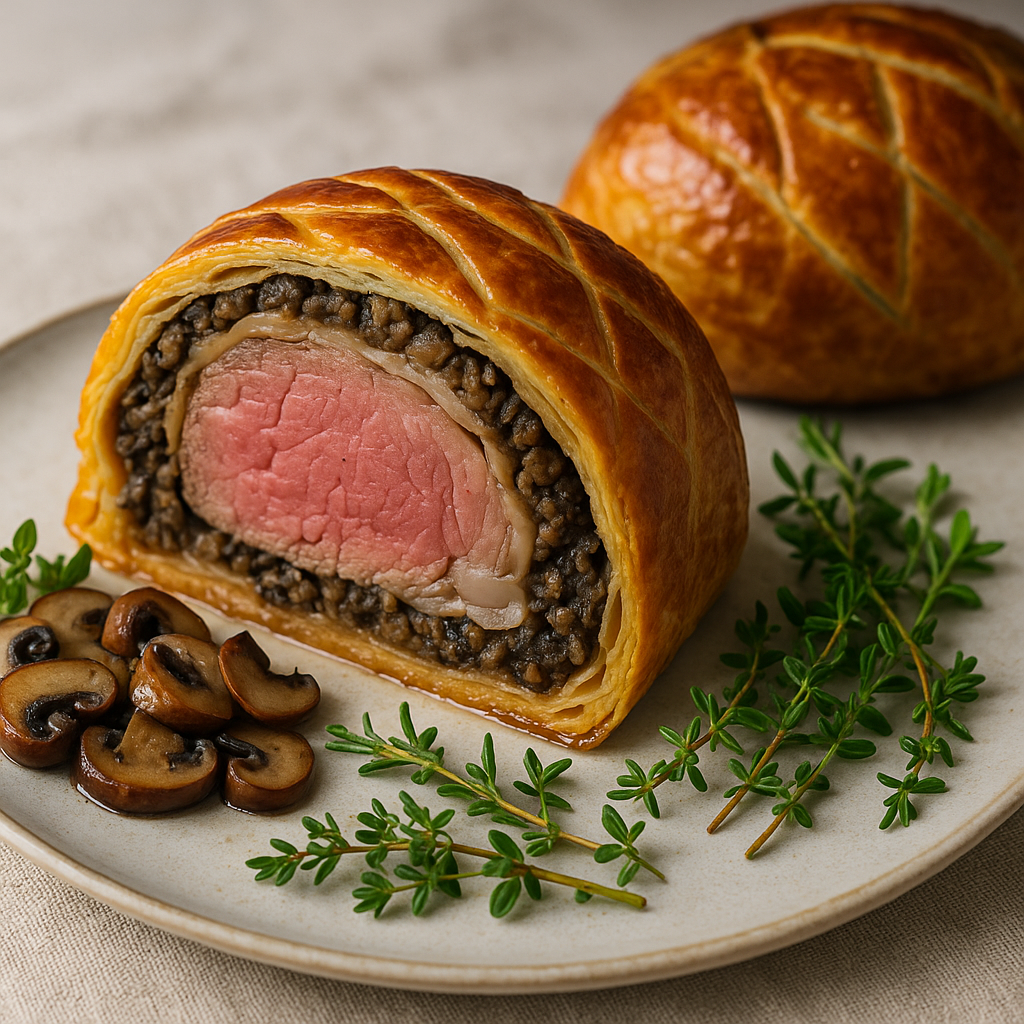
A classic Beef Wellington with sous vide tenderloin, mushroom duxelles, lardo, and puff pastry. The meat is cooked precisely, then frozen before baking for a perfect golden crust.
Ingredients
- 900 g beef tenderloin
- 2 puff pastry sheets
- 600 g cremini mushrooms
- 200 g shallots
- 32 lardo
- 25 g Dijon mustard
- 1 whole egg
- 8 sprig thyme
- 4 sprig oregano
- 4 sprig rosemary
- 100 g Madeira
- salt
- black pepper
- beef tallow
- canola oil
- all purpose flour
- non-stick parchment paper
- plastic wrap
Nutrition (per serving, estimated)
Estimated based off 10 of 18 identified ingredients (per 100 g food data, scaled by amount).
Vitamins & minerals
- Calcium: 101 mg
- Iron: 5.76 mg
- Magnesium: 55.6 mg
- Phosphorus: 453 mg
- Potassium: 1065 mg
- Zinc: 6.69 mg
Let's Prepare
Collect
Gather these ingredients — no prep needed yet.
- 900 g beef tenderloin
- 2 puff pastry sheets
- 600 g cremini mushrooms
- 200 g shallots
- 32 lardo
- 25 g Dijon mustard
- 1 whole egg
- 8 sprig thyme
- 4 sprig oregano
- 4 sprig rosemary
- 100 g Madeira
- salt
- black pepper
- beef tallow
- canola oil
- all purpose flour
- non-stick parchment paper
- plastic wrap
Let's Cook
-
Step 1.
Trim the center-cut beef tenderloin and season with 1% of its weight in salt. Wrap tightly in plastic wrap, then vacuum-seal or use a water-displacement method for sous vide. Cook at 130°F (55°C) for 3 hours, then refrigerate until cold, at least 2 hours.
-
Step 2.
Shallow-fry the chilled beef in canola oil or beef tallow at 400°F (205°C) for 60 to 90 seconds, turning to develop a medium-brown crust on all sides. Blot off excess oil with paper towels, then chill again and keep refrigerated until needed.
-
Step 3.
Finely chop the shallots and cremini mushrooms. Cook them together in a pan over medium-low heat, stirring occasionally, until they release their moisture. Season with salt and pepper, add sprigs of thyme and oregano, and continue cooking until the mixture looks dry, about 10–15 minutes.
-
Step 4.
Deglaze the pan with Madeira, scraping up any browned bits, and cook until the liquid evaporates and the mixture is dry again. Remove the herb sprigs and let the duxelles cool to room temperature.
-
Step 5.
Lay out 32 thin slices of lardo on a sheet of non-stick parchment paper, overlapping them slightly to form a solid rectangle about 12x16 inches. Work left to right and bottom to top, ensuring no gaps.
-
Step 6.
Spread the cooled duxelles evenly over the lardo sheet using an offset spatula, making a layer about 1/4 inch (6mm) thick. Leave about 1 inch of lardo uncovered at the top edge to allow for sealing.
-
Step 7.
Coat the chilled beef tenderloin with a thin layer of Dijon mustard. Place the beef on the duxelles-covered lardo, about one-third of the way up from the bottom edge.
-
Step 8.
Using a long sheet of plastic wrap (overlap two sheets if needed), lift the bottom edge of the parchment to roll the lardo and duxelles around the beef. As you roll, peel back the parchment so the top edge of lardo overlaps and seals. Tighten the roll with the plastic wrap, twist the ends, and refrigerate while preparing the puff pastry.
-
Step 9.
Roll out one sheet of puff pastry on a lightly floured surface to a rectangle a few inches wider than the meat roll and long enough to wrap around it completely. Brush the pastry with beaten egg wash.
-
Step 10.
Unwrap the chilled meat roll and place it on the egg-washed pastry. Roll the pastry tightly around the meat, pinching the ends closed and trimming excess pastry. Brush the entire surface with egg wash. Optionally, create a lattice from the second pastry sheet and place it on top, then brush again with egg wash.
-
Step 11.
If using a wireless thermometer, make a small hole in the pastry and wiggle the probe to enlarge it slightly (it will shrink during freezing). Wrap the Wellington tightly in plastic wrap and freeze until solid, at least 4 hours or overnight.
-
Step 12.
Preheat a convection oven to 450°F (230°C). Unwrap the frozen Wellington and let it thaw at room temperature for about 10 minutes. Brush again with egg wash and optionally place rosemary sprigs in the lattice windows.
-
Step 13.
Insert the thermometer probe into the hole (if using) and bake until the crust is dark golden brown and the surface sensor just beneath the crust reaches 190°F (88°C), about 40 minutes. Rotate the Wellington as needed for even browning; if the crust darkens too quickly, reduce the oven temperature to 350°F (175°C).
-
Step 14.
Once the crust is fully baked, crack the oven door and reduce the oven temperature to below 200°F (93°C), ideally around 150°F (65°C). Continue heating until the core temperature reaches at least 105°F (40°C), about another 40 minutes. Monitor with the thermometer to ensure the surface of the meat does not exceed 120°F (49°C); it will carry over to about 130°F (55°C) during resting.
-
Step 15.
Remove the Wellington from the oven and let it rest for 10–15 minutes before slicing. Slice into thick rounds and serve.